

Refuse Collection Vehicle
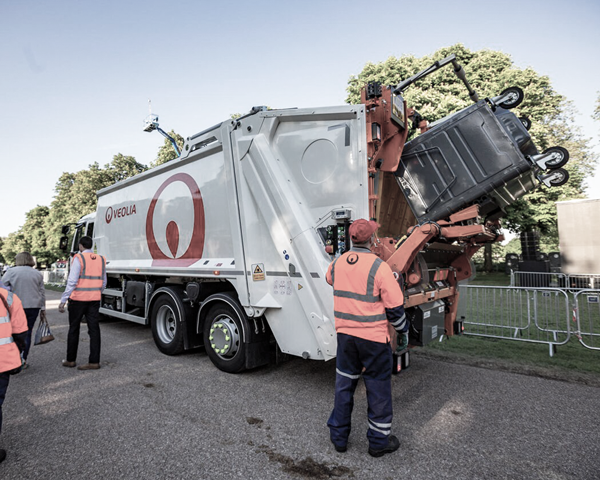
An Refuse Collection Vehicle (RCV) is a type of lorry used to empty Wheelie Bins at a waste producers' premises without the removal of the Wheelie Bin from the site. The lorry works in a similar way to a REL Lorry but uses a 'comb' lifting device that hooks under the lip of Wheelie Bin (see Wheelie Bin WikiWaste page) to allow it be lifted and emptied into the rear of the lorry (hence it is also sometimes called a 'rear end loader').
An RCV can lift two smaller Wheelie Bins such as a 240 litre capacity, or one larger Wheelie Bin such as a 1100 litre capacity. A Kerbside Collection Lorry can also be termed an RCV but this type of lorry is separately listed on WikiWaste.
Process
- The Wheelie Bin has a lip on the front edge opposite the hinge of the lid, which locates on a 'comb' lifting unit attached to the rear of the lorry.
- When the comb is engaged the bin is lifted and pivots on the rear of the lorry, and empties its contents into the rear of lorry.
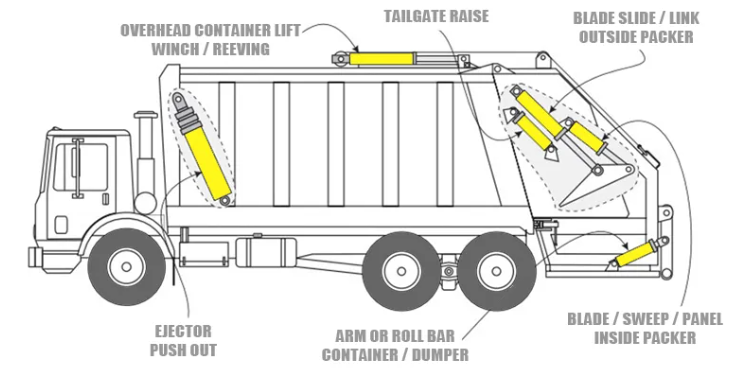
- The point of waste deposit into the lorry is called a hopper, and within this unit there is a hydraulic ram that pushes the waste into the body of the lorry via a blade through a series of compacting cycles)(see diagram below).
- This compaction allows multiple bins of compressible waste (such as Cardboard and/or Residual Waste) to be emptied and compacted into the lorry to optimise the weight and the logistics associated with onward transportation for processing.
- At the point of unloading/discharge, the rear section of the lorry, including the compacting hopper unit, opens upwards at the rear of the lorry, and a separate hydraulic ram is then used to push the collected waste out of the vehicle.
Cross Section of RCV Lorry
Notes
- The cross section shows the relative poisition of the different hydraulic rams for operating the lorry[1]
- Rams at the rear of the vehcile control the cycle of the ram for compressing the waste, with a separate ram for the lifting of the comb that lifts the bins
- A ram at the front of the vehicle pushes waste out once the entire tailgate is lifted by a dedicated ram
Other Configurations
Background
The body of an RCV can be configured to collect multiple materials, something which has become more common since the early 2000's.
This might include, for example, a split body to facilitate a Twin Stream Collection and/or an additional separate non-compacting section for food waste at the front of the lorry (often known as a 'pod') with its own lifting device on the side of the RCV.
Three examples of the main configuration options are set out below.
Split Body Configuration
Notes
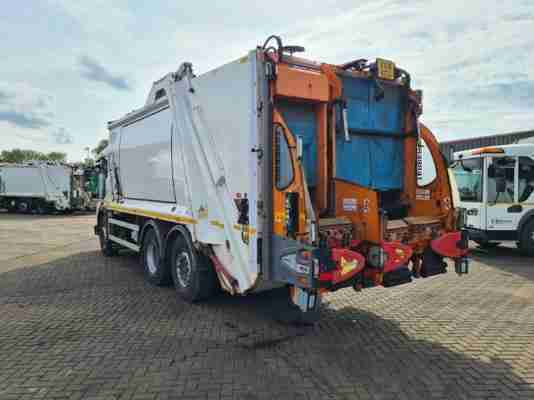
- Example of Split Body RCV for Twin Stream Collection
- The picture shows a 70/30 split body, but other configurations are possible.
POD Configuration
Notes
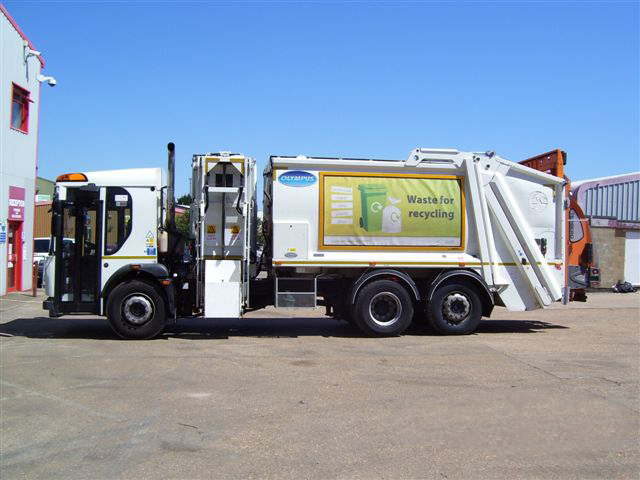
- Example of 'pod' on front of on RCV for Food Waste Collection
- The picture show this on a larger RCV lorry, but this can be configured on a smaller lorry dedicated to Food Separate collection arrangements where there is no compaction in the body of the vehicle.
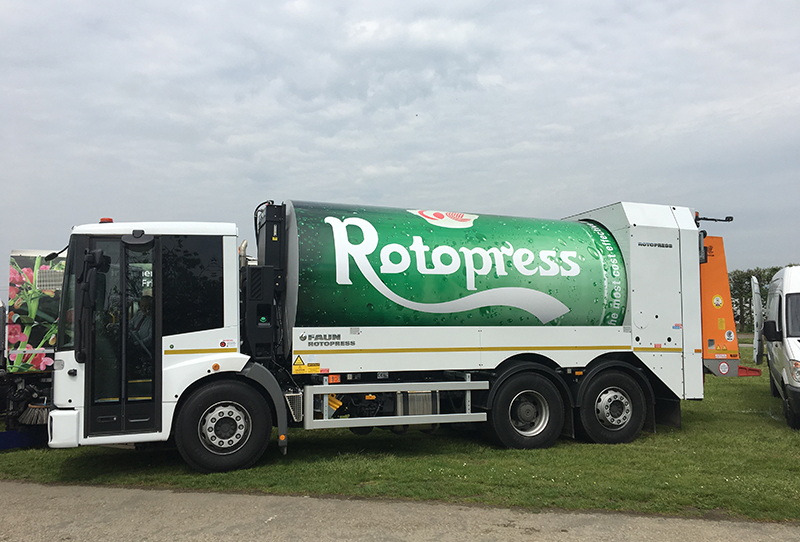
Rotopress
Notes
- The Rotopress style of RCV is less widely adopted in the UK, but can be used for the same range of activities as the RCV configurations described above.
- It is often seen to have specific benefits in collecting green waste (potentially mixed with food waste as a Green Comingled arrangement) due to the way it mixes the waste during collection.
Lorry Sizes
Background
The overall size of an RCV can be specified according to the chassis size (and is expressed in terms of weight of the vehicle) and intended bodies that sit on the chassis.
The choice may therefore reflect the configuration of the RCV required, or often is a reflection of the width and access limits on a collection route - for example smaller narrow bodied vehicles for inner-city restricted access or country lanes in more rural areas.
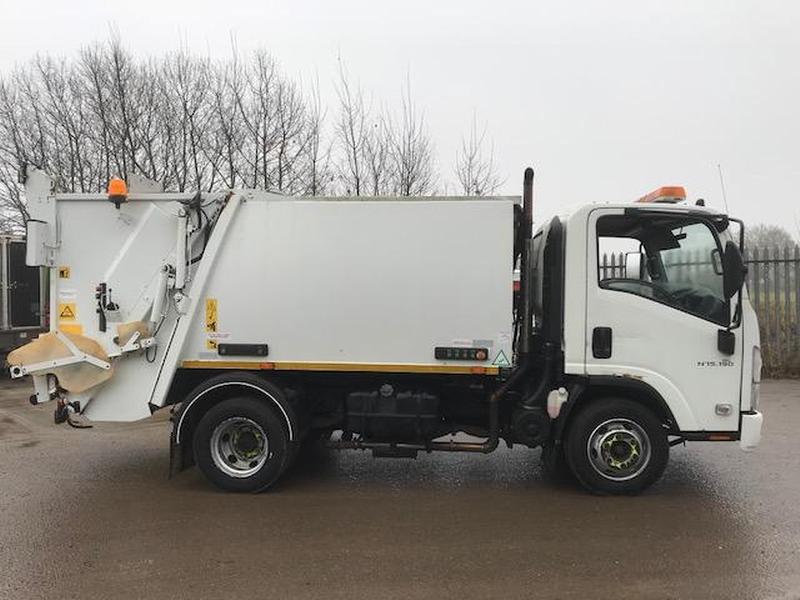
7.5 and 12 Tonne Truck
Notes
- 7.5 tonne Isuzu RCV pictured
- Note single axle at rear
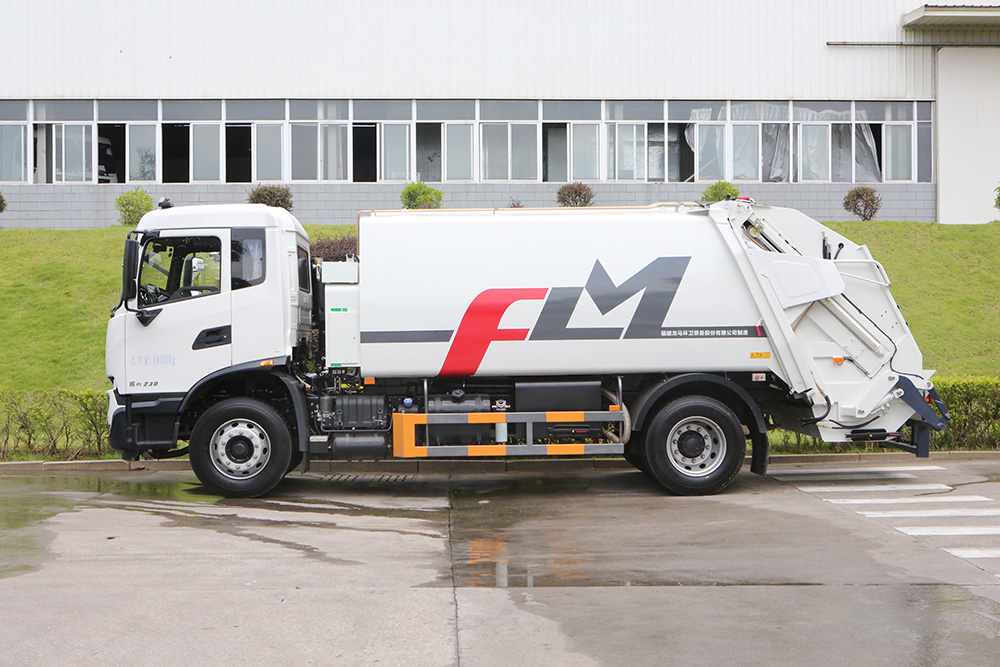
15 and 18 Tonne Truck
Notes
- 18 tonne Fulongma RCV pictured
- Note single axle at rear
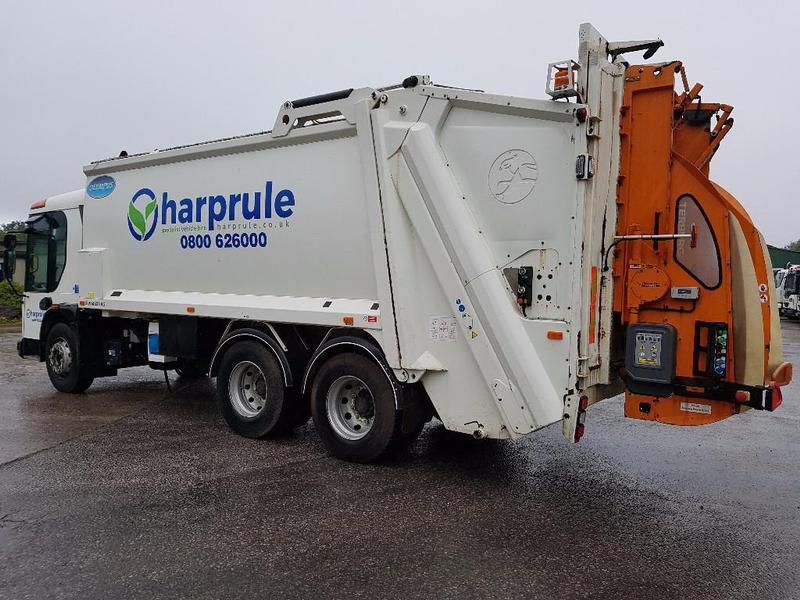
26 and 32 Tonne Truck
Notes
- 26 tonne Dennis RCV pictured
- Note twin axle at rear
References:
- Cross section by Wastebuilt and Eagle Hydraulics