

Inert Landfill
An Inert Landfill can only accept Inert Waste that meets the definition of inert in the legislation [1] and the relevant Waste Acceptance Criteria (WAC) [2]. The legislation provides a list of Inert Waste that can be accepted without testing where there is confidence that the waste is not contaminated, all other Inert Waste must be tested to demonstrate that they meet the leaching limit values given in the legislation.
This type of infrastructure provides the overview of Inert Landfill facilities for the UK, linking to individual pages for each facility that provides greater detail.
Overview
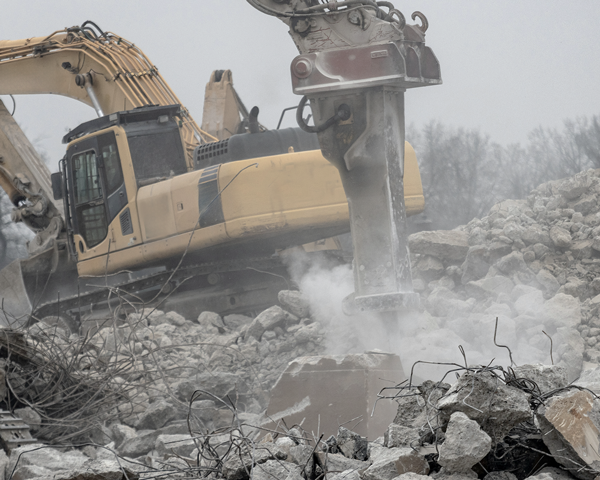
Inert Landfill facilities dispose of primarily soils, subsoils and certain construction and demolition wastes that meet the relevant WAC. They historically have played a significant role in the disposal of soil from construction projects (i.e. foundations) and the restoration of quarries used to win minerals (i.e. sand and gravel) back to agricultural use. Inert waste materials are increasingly being used for engineering projects and for recycling via washing to recover secondary aggregates.
In WikiWaste, Inert Landfill is treated as a distinct infrastructure type within the wider Landfill category. This page provides a structured view across the national fleet and connects through to individual facility pages and Local Authority disposal routes.
Parameters (England Only) | Stats. | Units/Year | |
|---|---|---|---|
Number of Operational Facilities | 144 | number (2024) | |
Tonnes Received | 15,529 | '000 tonnes (2024) | |
Remaining Void | 82,578 | '000 cu metres (2024) | |
Remaining life at current fill rate | 5.3 | years (2024) |
Remaining Void Trend
Latest Remaining Void by Country
Country | Year | No. Sites | Void (cu m) | Void/Site (cu m) |
|---|---|---|---|---|
England | 2024 | 144 | 82,578,108 | 573,459 |
Scotland | 2024 | 13 | 10,814,323 | 831,871 |
Wales | 2018 | 4 | 1,014,676 | 253,669 |
Northern Ireland | no data | - | - | - |
The graph is for operational, mothballed and closed sites. The tables above are for operational sites only. They exclude sites that are exempt from permitting.
The link to Data Sources and Limitations at the bottom of the page captures other assumptions and approaches to this data.
Inert Landfill Map
Map in development
References:
- Environmental Permitting Guidance – The Landfill Directive (Version 3.1 March 2010); updated by Guidance LFD 1 – Understanding the Landfill Directive (March 2011); which was then withdrawn in October 2022 and replaced with Guidance on Environmental Permitting
- Council Decision establishing criteria and procedures for the acceptance of waste at landfills
- Remaining Landfill Capacity (England)