

Stabilised Non-Reactive Hazardous Waste (SNRHW)
A Non-Hazardous Landfill can receive Stabilised Non-Reactive Hazardous Waste (SNRHW) if certain criteria are met, including acceptance limits and the requirement that any cell which receives this material is separated from cells receiving Biodegradable Waste.
This includes Gypsum waste and high Sulphate waste (such as Plasterboard) within acceptance limits to prevent the 'unacceptable emissions of hydrogen sulphide gas'. If the acceptance limits for 'high sulphate bearing wastes' are exceeded then the material must go to a Hazardous Landfill.

Arrangements
The approach within WikiWaste is to include these sites within the Non-hazardous Landfill type.
The most recent UK guidance on the Landfill Directive and the Landfill of Stabilised Non-Reactive Hazardous Waste that sets out the requirements is LFD1 Understanding the Landfill Directive[1] is published by the EA and referred to by the other regulatory bodies in the UK. This guidance has been superceeded by permitting guidance.
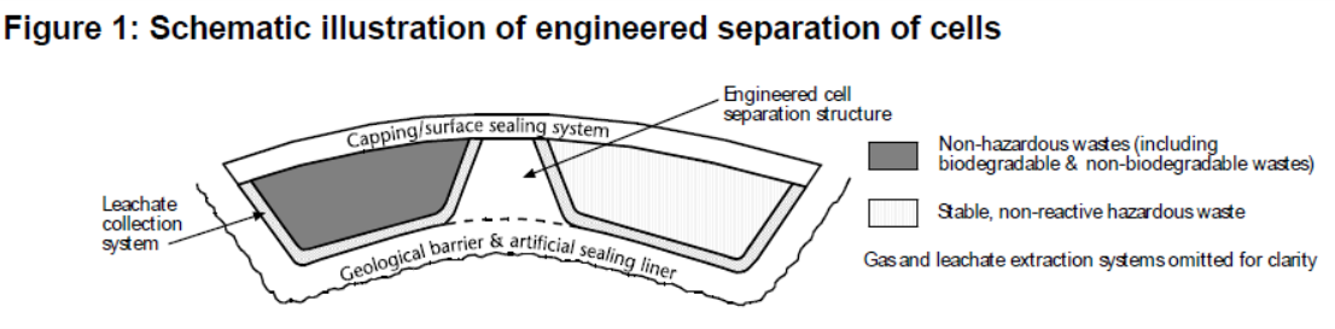
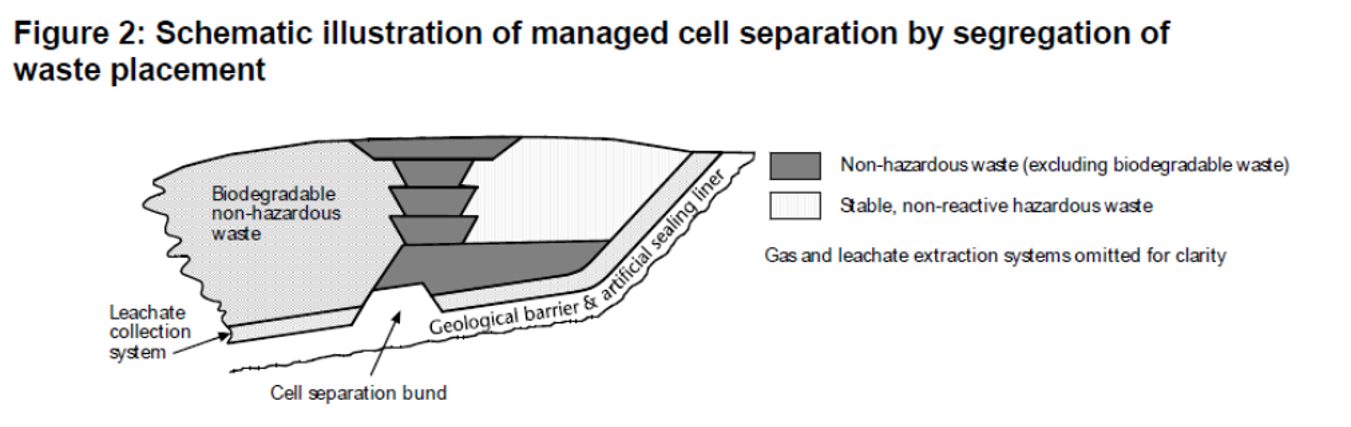
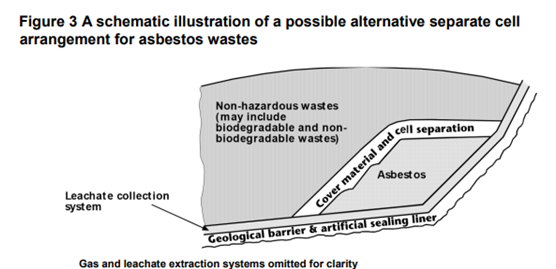
Figures for possible separation of cells are included in the original guidance and are repeated below.
'Engineered Separation'
Notes
- The original guidance figure 1 showed the engineered separation of cells
'Operational Segregation'
Notes
- The original guidance figure 2 showed the separation of cells durng progressive filling by using selectted non-hazardous waste
'Segregated Cell'
Notes
- Shared engineered systems and leachate collection system, with segregation by cover and inert material - typical application for sheet asbestos wastes