

Bolton TRF
An EfW facility based upon conventional combustion technology which is not considered an ERF as a result of not having R1 status. Bolton has permitted capacity of 128,000 tonnes per annum.
The plant is operated by Suez after the termination of the PFI contract with Viridor in September 2017[1] . Delivery of waste is by road and the facility processes primarily residual Household Waste.
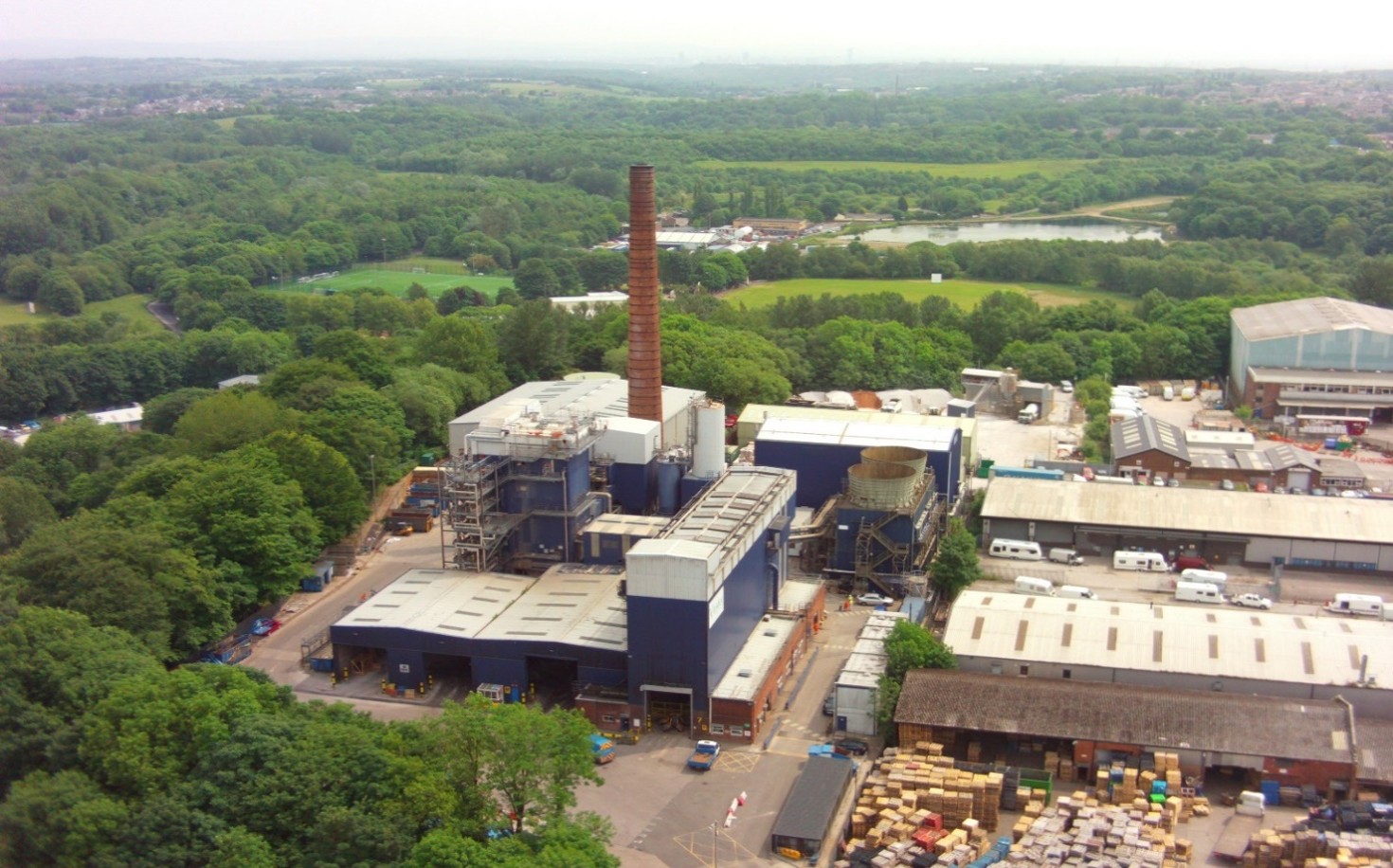
Site Details
| Operator | SUEZ |
|---|---|
| Site | Bolton TRF |
| Site Size | Medium |
| Permit No | RP3036QU |
| Plated Capacity | 128000 |
| Status | Operational |
Plant Description
The plant comprises standard combustion, generating super-heated steam, and is configured to run on primarily residual Household Waste and similar residual Commercial Waste from Bolton MBC, Bury MBC, Salford CC and Rochdale MBC[1].
History
The Bolton facility was built to primarily service residual Household Waste from Bolton Metropolitan Borough Council under a long term contract in 1970.
The plant was refurbished in 1996 through to 2000 to comply with new emissions standards with the intention of processing up to 100,000 tonnes per year and generating 8MWe.
After a fire in September 2017 there were issues re-opening, which initially occurred in July 2018 without energy generation[2].
Since June 2019 the plant has bene operated by Suez[1].
| METRIC NAME | 22/23 | 23/24 | 24/25 |
|---|---|---|---|
| PERFORMANCE BENCHMARKS | |||
| Recycling rate rank (England) | 84 | 82 | 79 |
| Household kg per person rank | 237 | 241 | 241 |
| Cost per household (£) | 87.40 | 91.20 | 93.10 |
| Cost rank vs England average | 112 | 118 | 121 |
| CONTRACT INTELLIGENCE | |||
| Active contracts (estimated) | 3 | 3 | 4 |
| Residual treatment route | EfW | EfW | EfW |
| Contract renewal risk score | Low | Low | Medium |
| Peer group performance index | 84 | 82 | 79 |
| DIVERSION AND EFFICIENCY | |||
| Dry recycling capture rate (%) | 42.1 | 43.8 | 44.2 |
| Residual waste per household (kg) | 459 | 451 | 444 |
| Diversion rate benchmark band | Top 20% | Top 22% | Top 19% |
References:
- Annual Report 2024
- Letsrecycle Article Nov 2018