

Biomass Waste EfW
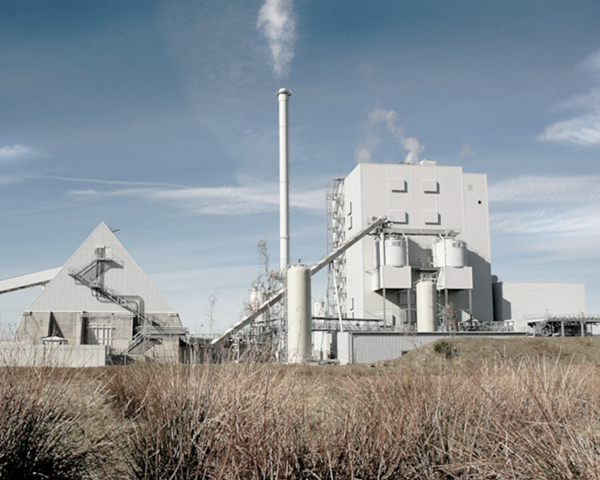
Biomass Energy-from-Waste (EfW) facilities treat a range of biomass-rich wastes, with a focus on Waste Wood, Meat and Bone Meal (MBM), Agricultural Wastes and Sewage Sludge.
The facilities captured here in Wikiwaste exclude Residual Waste EFW (which is separately listed and, in itself, has a proportion of biomass – see below) and also exclude facilities with no waste input, but focused purely on Virgin Wood, Energy Crops (ie Miscanthus) and Process Residues (such as kernels, shavings and sawdust).
The majority of these facilities have waste materials pre-treated to be suitable for energy recovery and converting that to electricity via steam or supplying that steam to adjacent industrial users. In the case of Sewage Sludge these materials are increasingly being directed towards other treatments, and the two facilities listed here have a primary purpose of destruction of the material.This type of infrastructure provides the overview of Biomass Waste EfW facilities for the UK, linking to individual pages for each facility that provides greater detail.
Overview
Biomass EfW facilities treat waste that remains after reuse and recycling. They play a significant role in generating renewable energy, determined by the focus on renewable biomass material and the associated economic subsidies that led to the increase in such facilities from around 2002 to 2017.
In WikiWaste, Biomass Waste EfW is treated as a distinct infrastructure type within the wider Incineration & EfW category. This page provides a structured view across the national fleet and connects through to individual facility pages and Local Authority disposal routes.
Parameters
| Stats. | Units/Year | |
|---|---|---|---|
Number of Operational Facilities | 60 | number (2024) | |
Waste Wood Tonnage | 2,925 | '000 tonnes (2024) | |
Poultry Waste Tonnage | 554 | '000 tonnes (2024) | |
Meat and Bone Meal Tonnage | 233 | '000 tonnes (2024) | |
Other Biomass Tonnage | 763 | '000 tonnes (2024) | |
Virgin Wood Tonnage | 107 | '000 tonnes (2024) |
Biomass Waste to Biomass EFW Sites
Notes
- The graph is for those Biomass EFW sites reporting via their annual returns
- Tonnage to these Biomass materials going to other infrastructure are excluded
- Tonnage of 'other waste', sewage sludge and RDF are excluded (in 2024 equivalent to around 100, 40 and 4 thousand tonnes respectively)
- Virgin Wood is only included for those sites receiveing the material alongside other waste(s) and excludes virgin wood based facilties
Biomass EfW Map (Waste Focused, no Sewage Sludge)
Map Guide

Search sites

Zoom in/out

Reset Map

Toggle layers

View legend

Switch basemap

Click for details
_____________________
View full guide to maps
Measurement of Biomass in Feedstock
The amount of biomass/biogenic carbon in the waste feedstock is an important parameter as the proportion that is derived from the biogenic content affects the proportion of the heat/electricity produced that can be classified as renewable (and therefore eligible for subsidies e.g. ROC, RHI).
This quantity of biomass in the feedstock also forms the basis of the Renewable Qualifying Multiplier (RQM) to calculate the quantity of payments made to a generator in line with the Contract for Difference (CfD) scheme.
In the case of Biomass EfW the large proportion of the feedstock is biomass/biogenic in nature and under the RO has to report annually against sustainability criteria.
Biomass in Residual Waste Feedstock
The facilities in the Biomass EfW type of infrastructure do not receive Residual Waste, although some have received limited tonnage of SRF and/or RDF.
Residual Waste and SRF/RDF have a proportion of biomass content, with the non-biomass portion of waste feedstock (e.g. plastics) not eligble for subsidies.
Facillities using these fuels can 'claim' the benefits of renewable power for the element that is biomass-based.
Typically feedstocks such as Waste Wood and RDF/SRF differ significantly, however, with different handling charateristics, different proportions of ash and higher content of other contaminants in RDF/SRF. This then requires more stringent control systems when using RDF/SRF to ensure compliance with the Industrial Emissions Directive and more robust enginnering in what is a more aggressive combustion environment.
Sewage Sludge EFW
The progressive implementation of the European Urban Waste Water Treatment Directive 91/271/EEC throughout the EU Member States is leading to an increase in the quantities of Sewage Sludge requiring Disposal.
This increase is mainly due to the practical implementation of the Directive, however the constant rise in the number of households being connected to local sewerage systems is also leading to an increase in the level of Sewage Sludge requiring treatment[7].
The Sewage Sludge Directive 86/278/EEC was adopted over 20 years ago with a view to encourage the application of Sewage Sludge in agriculture and to regulate its use in order to prevent harmful effects on soil, vegetation, animals and humans.
The European Commission is currently assessing whether the current Directive should be reviewed[7].
At present only two plants have provided annual reports under the Industrial Emissions Directive in the UK (Beckton and Crossness) with only one reporting in 2024 ( Beckton). These plants are exluded from the listing below and from WikiWaste at the current time.
Cement kilns accepted a small tonnage of pellets formed from sewage sludge in the past, but in the most recent reports only received a small amount of sludges from the water treatment process[2].
Operational Biomass EFW (Waste Focused, no Sewage Sludge)
Caledonian
Chilton
Goosey Lodge
Holbrook
Ince Biomass
Kent REP
Lancing
Lisahally
Magram
Markinch
Newark
Ridham
Templeborough
Twinwoods
UPM Shotton
Western Wood
Widermerpool
Widnes
Wilton 10
Mothballed Biomass EFW (Waste Focused, no Sewage Sludge)
The following projects entered into construction but have not reached full operation. The likelihood of them coming into operation varies according to opinion:
- Biomass UK No.1 (Hull)
- Biomass UK No.2 (Barry, Wales)
- Biomass UK No.3 (Boston)
- Bridge Farm - SPEP (Spalding)
- Port Clarence EfW (previously waste wood, now being redeveloped for residual waste)
- Trackworks (focused on hazardous waste wood and railway sleepers, reported under High Temperature Incineration)
References:
- Gasification of waste for energy carriers (IEA Bioenergy 2018)
- E-on Steven's Croft biomass plant
- Annual Report Data
- Waste Interrogator
- WasteDataFlow
- Ofgem - Biomass Sustainability Dataset
- Sewage Sludge - EU Commission
- Annual Report and WDI Data